So, you’ve launched your first mobile application! After a lot of effort and hard work to make your own app, you finally went live with your mobile app.
Congratulations, it is a big accomplishment!
You should be proud of this achievement. But, just launching your mobile app is unfortunately not enough.
If you’re under the impression that you can now sit back and relax and watch your business bloom, then that could be further from the truth in today’s world!
As per the latest statistics for the third quarter of 2019, there are over 2.47 million apps on the Google Play Store and 1.8 million available apps on Apple’s App Store. This only proves that the competition in the app market is fierce and the chance is bleak for any new mobile app to succeed.
So, does that mean that one should not venture into the mobile app market now since the market competition is immense?
Absolutely not! With the advent of technological breakthroughs, especially in the mobile app platforms, more and more consumers are preferring to access the web from mobile browsers and mobile apps. And, due to this reason alone, there has never been a better time to launch a mobile application.
So how do we ensure success with our latest mobile application?
The simple answer to that would be the right preparation and correct implementation.
AppMySite’s free mobile app builder enables you to create apps that are built to scale your business.
Aiming at achieving over 10,000+ downloads is very much feasible and we’ll show you how. Our mobile app marketing experts have curated some of the best practices that you must follow to ensure a successful mobile app from the get-go.
Overview
- Correct Keyword Selection
- App Title
- Subtitle
- App Description
- Engaging Video
- Beautiful Screenshot Designs
- App Icon
- Ratings and reviews
Ensure top-notch quality
You must think of your apps like a product or a service, and the number one way to ensure returning customers is to offer the best quality object. Similarly, to ensure increasing app downloads and minimum churn, you must ensure that your app is of superior quality.
From user-experience to load time, everything should be optimized to make sure that your consumer sticks to your mobile app and does not switch to one of your competitors.
This factor becomes even more important when you want sales and conversions from your mobile application. Let us look at stats that compare the cost of retaining a loyal customer for both iOS and Android.
The average cost of retaining a long-term iOS user is nearly 30% less than that of retaining a long-term Android user.
With AppMySite, you can rest assured that you receive a premium native mobile app for both iOS and Android. When you convert your WooCommerce website to mobile app with AppMySite, you ensure quality that your customers love.
Remember, that quality speaks for itself and you must keep updating your mobile app with the latest and compatible versions.
Get the basics right with ASO
To expect thousands of users to automatically flock to your newly launched mobile app listing page and download the app is unreasonable.
As a matter of fact, newly launched mobile apps hardly ever appear in search results and do not get the preference from the search engines.
One of the most prime ways to combat this and to ensure that your app starts appearing in the search results is App Store Optimization or ASO. Let us look at some of the main practices of ASO that you must implement on your app listing page.
Suggested Read : How ASO boosts your mobile app ranking
1. Correct Keyword Selection
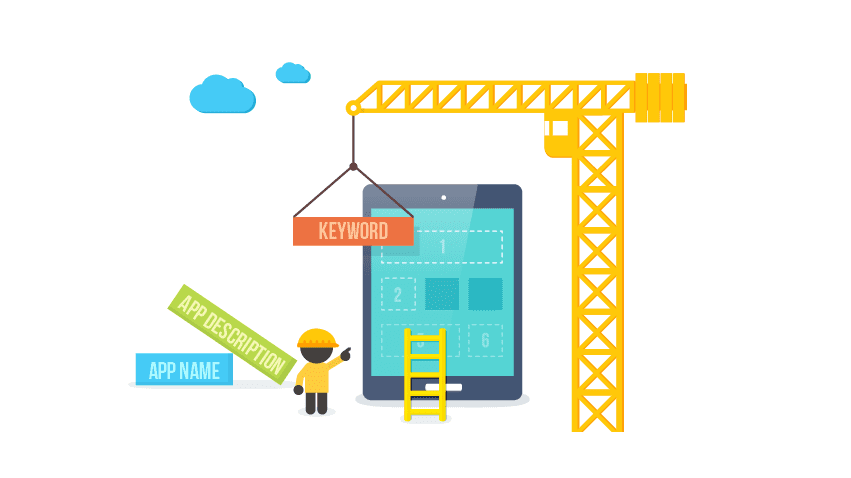
Keywords are the building blocks of all the content that goes on your app listing page. From the content of your app title to the content on your app description and much more, everything should be well optimised with the right keywords that are relevant to your business objective and target audience.
Therefore, you must spend a good amount of time and effort on selecting the right keywords for your app listing page content. Along with that, you must also do some research on your existing competitions, on what they are doing correctly and what areas you can improve on to gain a competitive edge.
There are some brilliant tools that can help you with this, the list is below.
- AppCodes
- Appnique
- SearchMan
- Appmind.co
- SensorTower
Do note that keyword selection is not a one-time process, you must keep a track of what keywords are performing well and which ones are not and keep updating your content. Keep trying out different variations to find what works well for you.
2. App Title
Choosing the app title is one of the most important factors when it comes to optimizing your app listing page. App title is different from the app name. App title is what appears on the app listing page and app name is what appears on your mobile phones.
Let us look at the app titles for some of the mobile applications that are faring very well for themselves to understand what they have done right.
- Dailymotion – the home for videos that matter
- LinkedIn Lite – Easy Job Search, Jobs & Networking
- Bumble – Date. Meet Friends. Network.
- Zomato – Restaurant Finder and Food Delivery App
- CamScanner – Scanner to scan PDF
As you can observe that each app title above has a name and a very short and crisp description of what the app does.
These app titles are optimized and an optimised app title helps the app store realise what the app is about and what the correct target audience for the app will be.
Your app title is should be short, simple and relevant to the industry that you cater to.
3. Subtitle
You can now add a subtitle for your mobile application as well. The subtitle has a 30 characters limit and can be utilized to highlight your mobile application and its offerings.
4. App Description
When a potential app user browses to your app listing page, the app description is what serves to him as an intro to what your app is about.
While submitting an app for publishing to the app store, you’ll have to fill two different fields for your app’s description. One is a short description and the other one is a long description.
Your short description limit is about 80 characters and the long description gives you a massive 4000 characters limit.
You must ensure that these fields and the character limits are utilized to the maximum to describe your mobile app in an engaging way. You must also not add content just to fill the space, it should be concise, relevant and specific to what your users are looking for.
Optimizing your app description with the relevant keywords will ensure that your app store understands your authority in your domain. This will promote your mobile application’s ranking in the search results.
Finally, your mobile app’s description is what will convince your potential user to either download your app or not to download the app.
5. Engaging Video
There’s always an option to upload a video for your mobile application listing page and you must utilize this opportunity.
Not everyone wants to read a long description of your app, which is where a video can come in handy.
A compelling yet short, engaging and relevant video can do wonders for your app listing page and app download numbers.
Uploading this video to YouTube opens up another marketing channel for your mobile application, i.e. video marketing, which is discussed in detail further in this article.
6. Beautiful Screenshot Designs
When uploading screenshots for your mobile application, do not just upload plain screenshots from your mobile app. Have them properly designed by professionals.
These screenshots should be attention-grabbing and beautiful enough to compel anyone to download your mobile application.
Let us look at a few samples below.
As you can observe from the above-listed apps, they have uploaded really beautiful and explanatory designs and are captivating and encouraging a user to download the mobile application.
7. App Icon
Your app icon is what represents your mobile app and your brand as a whole. Make sure it is designed well as you do not want to miss the brilliant marketing opportunity.
Making a visual impact on the mind of the users is as important as creating good content. Your app icon should be stimulating and compelling enough to invite users to open the app and use it often.
Make sure it stands out from the rest of the app icons on the user’s mobile device.
8. Ratings and reviews
No other marketing strategy is as powerful as the good old word-of-mouth. The ratings and reviews for your mobile application serve the same purpose. Any application with a good number of ratings and reviews will always promote more installs from new users.
Additionally, they serve another very useful purpose, more the number of positive reviews and ratings, the better your search rankings will get. Better response to your mobile application will make the search engine realize that your app is a better offering and can be placed above other applications that are not getting as good a response as the rest.
Encourage everyone in your network including your website users to leave a positive review and rating for your mobile app for both iOS & Android applications. This will serve as a good base for your initial batch of reviews and ratings and will eventually grow from there.
Implement exclusive discounts and offers for your application users to leave a positive rating and review. This will also promote a positive movement in this front.
Do make sure that you respond to as many reviews as possible, especially the criticisms or the ones on the negative side.
Google Index
Now that we’ve discussed the main App Optimization Strategies, let’s discuss other strategies that can be helpful for your mobile application’s success.
The next action for your mobile application should be to get it indexed on Google. Usually your mobile application URL will be automatically indexed on the Google search engine.
However, if in a case that even after a week or two your app is not indexed, have it manually cached by experts. This will improve your app’s visibility and downloads.
Additionally, a mobile application also helps improve your website’s ranking and in search engine optimization.
Pricing Strategy
One of the important factors in promoting mobile app downloads is the pricing strategy. To achieve the 10,000 downloads for your app, you must make sure that your mobile app is free to download.
You may have in-app purchases or a freemium strategy, however, the mobile app should be free to download at first. This will encourage new users to try your service in the first place.
Marketing
1. Content Marketing
Content marketing forms should get the biggest chunk in your marketing strategy and efforts. This is the number one way to promote your mobile application by directly interacting with your audience.
This includes the regular publication of premium and high-quality articles and blogs, on-page and off-page articles like writing for premium blogging websites like Blogspot and Medium and much more.
This activity not only builds great credibility for your brand but also serves as an amazing medium to promote your services, latest deals and offers on them.
Suggested Read : Complete guide to build and make your mobile app a success
2. Social Media Promotion
Being active on social media platforms does not only serve as a great branding medium but also helps your users connect with you and promotes customer engagement, which is an important aspect for B2C businesses.
If you are an existing business then most probably you already have social media accounts for your brand. It’s time to leverage that to promote your mobile application.
Extensively promote your mobile application on your social media posts, stories, videos and much more.
Pinterest, Facebook, Instagram and Twitter are some of the most premium social media platforms today. TikTok is another social media platform that is relatively new but is growing very rapidly.
Select the ones that best suit your target audience for targeted promotions.
3. Video marketing
Video marketing is another marketing channel that is relatively new but has very quickly become a premium pillar in promotion of any kind. Be it a product review or influencer promotion, video marketing covers all.
YouTube has become the 2nd largest search engine after Google with over 1.9bn users. Therefore, you should take video promotions very seriously. More and more people are now preferring videos over written content as it is easier to understand and does the job quicker.
Extensively promote your mobile application with regular video uploads. This not only helps build your brand but also gets maximum visibility and ultimately promotes mobile app downloads.
Make sure that your videos are engaging and of appropriate length. You can optimize the videos with a good thumbnail and the right title, description and tags.
You can also involve existing YouTubers to promote your mobile application. We will discuss this further in detail.
Networking & Publicity
Networking and publicity can do wonders for your mobile applications.
Join and become a part of multiple relevant networks for your business and target audience. Spread the word about your new mobile application amongst your peers and encourage them to download and use it.
Ask them to leave a positive review on the app store and to spread the word. As we discussed earlier, word of mouth is the most effective marketing strategy.
Join relevant groups on various networking websites like Facebook and LinkedIn groups to promote your mobile application and encourage downloads.
Referrals & Advocates
Introduce referral marketing amongst your app users. You can introduce a small reward or an incentive for each successful referral.
This will encourage your existing users to bring in more users and eventually increase your customer base.
You can also designate existing loyal customers as your advocates, who can then further introduce your mobile app amongst their networks.
Submit app to multiple stores
Another strategy is to promote your app on other app store markets. There are multiple app store markets where you can list your mobile application.
These markets facilitate the process of advertising different types of mobile apps by freelancers, start-ups, and businesses.
You can submit your app for review or add the description of it with a photo in a proper category, which will allow you to more accurately reach potential users.
Here’s a list of a few such platforms.
- Touchpads
- Phonedog
- Alphadigits
- Apps4review
There are many more such platforms that you can leverage for your app promotion.
Paid Promotions
1. AdWords
Another very smart marketing strategy is to run paid advertisements on multiple platforms. Be it Google AdWords or paid ads on social media like Facebook, LinkedIn, Instagram and YouTube.
Paid ads allow you to reach your target audience immediately without many efforts. Make sure that you define your ad campaigns very well including the correct audience demographics like age, gender and location.
If required, you can also consult an expert like PPC managers.
2. Press Release
There are multiple online and offline publications and news agencies that can promote your mobile application and get you the exposure that you need.
This is a step that you’d not want to skip if you are looking at achieving 10,000 downloads milestone.
Do note that there are multiple free PR agencies as well, but they do not offer the required exposure as their audience is very limited. You may want to start your campaign with a free PR to test the waters.
3. Bloggers, Influencers & Celebrities
Involving bloggers, influencers and celebrities is another good strategy to promote your mobile application.
Identify the bloggers and influencers that directly engage your target audience and approach them with an offer for your app promotion.
Your campaign cost will depend on how big the influencer you engage is. You’ll be able to negotiate the number of views, impressions and downloads for your app with them as well.
Streamline app performance
Getting to 10,000 downloads is not possible without generating some form of goodwill amongst your user base. Word-of-mouth is easily the best marketing tactic to help you reach the 10K milestone.
However, word-of-mouth is only possible when your app performance is optimal. When working with app making tools like AppMySite, app performance depends heavily on website speed. The best way to optimize website speed is getting the best possible hosting solution.
WP Engine is the best hosting company delivering reliable WordPress experiences to 90K customers across 140 countries. It helps WordPress websites get blazing fast speeds along with impregnable cybersecurity. Other benefits include simple website management and insights on frontend performance.
Miscellaneous
Now that we have discussed multiple strategies to promote your mobile application, let us also discuss a few other strategies that may not be as important as the rest but still can contribute to your app downloads.
1. Awards
There are multiple organizations that commemorate mobile applications and other technological software with tech awards.
These awards improve your mobile app’s credibility amongst the general population.
Do note that there are some awards that are paid as well. In other words, you can buy the awards. You may want to consider taking that route depending on the award’s credibility.
2. Viral Marketing
Many brands get the visibility that they want by creating a viral marketing campaign. It could be a challenge on social media or a funny meme that gets so famous that the brand gains the branding that they desire.
However, there are no fixed rules or strategy to create a viral marketing campaign. You must brainstorm on what can work amongst your target audience.
Do note that viral marketing is a double-edged sword, it can garner both positive and negative publicity.
3. Website promotion
Your website is your brand’s face on the web. Make sure that your website is optimized and functionally operational.
You can also leverage this online real estate, i.e., your website to promote app downloads with either an attractive main banner, or a pop-up that redirects your users to your mobile app.
4. Email signature
Another small hack is to include the link to your mobile application in your email signature. This will give your application an added exposure.
5. Email Marketing
Since you already have an audience from your website, you can include email marketing for mobile app as a strategy to gain the exposure and eventually downloads for your app.
Conclusion
There you go, we’ve discussed a foolproof plan to promote your new mobile application. With the implementation of the above tried and tested promotion methods, your mobile app marketing strategy is complete and you’re on the right track to accomplish your goal of having more than 10,000 mobile app downloads.
Get in touch with us for any other information. If you’re looking to develop an e-commerce app then look no further, AppMySite online app maker has you covered.