
Doctor appointment apps and clinic apps are the rising trend of the mHealth industry. It is revolutionizing the digital healthcare industry for the better.
The app industry has also gone through a revolution in the recent times to cope up with these changes. It has become easier to build, customize and publish apps.
As any business owner, you can make your own app without coding with DIY app building tools. But there are certain nuances that you must consider while building your app.
Let us explore the blog further and discover the nitty gritty details of a perfect clinic app!
In this blog
- #1: Centralize your operations and workflow
- #2: Manage appointments effortlessly
- #3: Boost staff efficiency with automation
- #4: Organize bookings and checkout
- #5: Boost communication with patients
- #6: Earn more visibility and conversions
- #7: Enhance business prospects and scalability
What are the advantages of building a healthcare app?
Considering the prospect of building an app for your clinic or hospital? Healthcare apps are taking off, but the advantages of having one for your business may not seem obvious. The following points explain some of the advantages of building a healthcare app:
- Optimize patient engagement: Chat directly with your patients and change how you interact with them in a virtual setup.
- Easy accessibility to information: Enable patients to get easy access to all necessary information such as prescriptions, dietary notes, appointment timings, and so on.
- Simplify payments: Allow customers to pay for medical counsel, medicine, and any other expense directly from the app.
- Send medicine and appointment reminders: With push notifications, send all forms of reminders to patients and ensure they remain on their medicine schedule. Also send appointment reminders if you plan to have a booking feature within the app.
Type of healthcare mobile apps
Many healthcare-based businesses have been moving their operations online. The advantages are obvious. You can make your business operations more efficient and market your products effectively. Building a mobile app is a good place to start as native applications are the ideal medium to promote your business.
Want to know all the types of healthcare apps you create? Here are a few examples of all the different types of apps you can develop.
Clinic app
As the name suggests, clinic apps are dedicated applications you can offer to patients who visit your clinic.
How does a clinic app help your business? Firstly, it’s a great way to engage directly with your patients. You can send medicine reminders, provide clinic timings, and even set up a payment system that patients can use. Given how much mobile usage has increased, launching your own clinic app may be a great way to stand out amongst other similar clinics.
Appointment booking app
An appointment booking app can be very convenient for your patients. Instead of calling your clinic or office to book an appointment, you can allow patients to choose from an available slot within your dedicated app.
You can integrate the appointment booking feature with a clinic or hospital app if you already have one. If a simple appointment booking feature seems to simplistic for an app, you can add other screens to make your app informative.
Medical reference apps
Many trained healthcare professionals write blogs that provide engaging insights on subjects related to medicine. In many cases, these blogs act as a great medical reference for readers interested in healthcare-related topics. If you’re using a healthcare app builder like AppMySite, you can easily convert your blog or website resource into a mobile app.
Medical reference apps are a good idea, but only when the information is vetted by licensed medical professionals. Users should be able to trust the information provided in the app, which is why the content curated should either be written or approved by a medical professional.
Pharmacy app
Perhaps the most obvious type of healthcare application is a pharmacy app.
Pharmacy apps have taken off in the last few years as demand for doorstep delivery has grown. Many businesses have tried their hand at pharmacy app development in order to create their own space in the market. While there’s a lot of competition, you can atleast build a pharmacy app easily with no-code development tools that make app creation easy.
Ensure a holistic solution for your patients
Offer a range of services to your clients and register unprecedented growth. Incorporate the features and benefits listed below and make your app a complete solution:
#1: Centralize your operations and workflow
Coherent operations and a streamlined chain of proceedings is something that all clinic owners desire of. Building an app can help you achieve that and optimize your workflow.
If you have a team of doctors at your clinic, and run multiple outlets, creating an app becomes must. Even as an individual, it will help you centralize all your operations and make most of the available resources.
#2: Manage appointments effortlessly
Make it easy for your patients to schedule an appointment with you. It can be managed and set as per the availability of the doctors and the convenience of the patients.
Avoid over-crowding by ensuring advance bookings and availability of the staff. You can also digitally redirect patient details, medical history and other information to the concerned staff and speed up the process.
#3: Boost staff efficiency with automation
Digitalization and making the business equipped with technological tools also helps in channelizing and increasing the efficiency of the staff. This ultimately leads to increase in the productivity.
You can automate a lot of activities and use the saved the time, resources and energy elsewhere. For instance, you can automate report deliveries, appointment reminders, and more.
#4: Organize bookings and checkout
As a clinic, if you have a lot to offer, your app must reflect the same. Make it easier for visitors to find the relevant options and book appointments by offering a range of services and facilities.
Add easy tags, searchable list of products and services, smart filtering and sorting, and more. Make the checkout process organized by integrating multiple payment options. Also enable them to apply discounts, and claim insurance benefits and loyalty rewards at the time of checkout.
#5: Boost communication with patients
Having an app ensures that you are just a click away from your patients and their family members. By engaging in regular conversations with them, you strengthen the proximity further.
For instance, you can organize webinars, health sessions, etc., and keep the app feed active for them. Also send in-app push notifications reminding them about due appointments, reports, new service updates and more.
Suggested Read: Unleash the power of push notifications for your healthcare app
#6: Earn more visibility and conversions
Ensure higher number of conversions by using the power of apps. You can integrate your social media accounts and interact with health experts and patients on different platforms.
You can also engage in App Store Optimization, Influencer Marketing and Email Marketing to grow the visibility and branding of your app. Grow your ROI (Return on Investment) and rate of interaction unprecedentedly.
#7: Enhance business prospects and scalability
The app you build, should always remain in sync with your website. It should be dynamic and scalable, and have the potential to grow as your brand name excels in the online industry.
You can also use your app to make efforts in this direction. For instance, you can sell medicines, health books, health aid devices, nutritional supplements, etc., through the app. Focus on growing your business prospects, set new milestones, and achieve them.
Frequently asked questions
Have questions about creating a healthcare mobile app for your business? Here are answers to some commonly asked questions about healthcare apps.
How do you develop a healthcare app?
Healthcare app development can be a tedious process if you decide to go with a custom-built app. Alternatively, you can sign up for a no-code platform and develop a healthcare app without writing a single line of code. On AppMySite for example, you can simply connect your healthcare website to your app and go live on the app stores.
How much does it cost to develop a healthcare mobile app?
The cost of developing a healthcare mobile app with traditional custom app development is somewhere between $50-70K. The cost may increase depending on the features, functionalities, and integrations you need.
In case you choose to sign up for a no-code platform, you can develop a healthcare mobile app at a fraction of the above cost and go live on Google Play and App Store.
How long does it take to develop a healthcare app?
The exact timeline can vary depending on the features you require. On average, it takes anywhere between 2-6 months to fully develop a healthcare app. Alternatively, you can sign up for an automated app development platform and build a healthcare mobile app in minutes. The advantage here is that you don’t need to wait weeks and months to get an app.
AppMySite is the solution you are looking for!
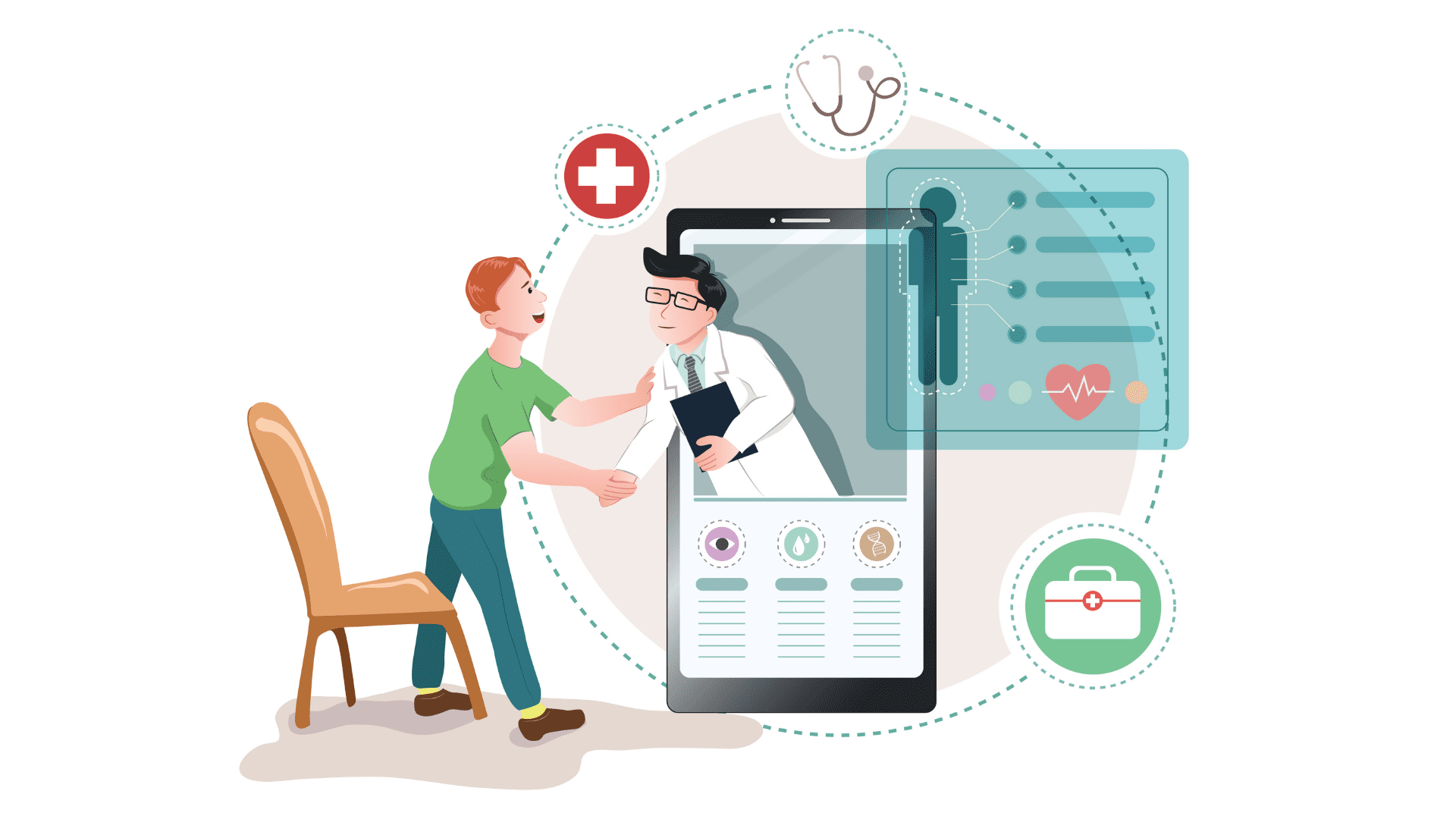
As discussed above, a clinic app can help you grow your business potential. Create an app and become the go-to digital health solution for your existing and new patients.
Sign up for AppMySite clinic app builder now to create, customize and test your own app without coding. When satisfied, publish the app on your preferred stores.
It is one the fastest growing technologies in the app development world and is being embraced by businesses across the globe. So, go ahead and claim your space without much ado.